Friday, February 3, 2012

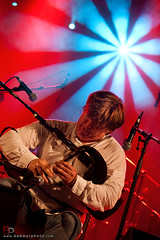
Paddy Keenan to perform at London Irish Centre

Paddy KeenanCover of Paddy KeenanThe Jimmy Hendrix of Irish piping will delight traditional music enthusiasts in London.
Paddy Keenan, a former member of The Bothy Band, performs at the London Irish Centre on Friday, February 3.
Born in Meath to a Travelling family steeped in traditional music - both Keenan’s father and grandfather were uilleann pipers.
Paddy himself took up the pipes at the age of 10, playing his first major concert at the Gaiety Theatre in Dublin at just 14. At 17, having fallen in love with the blues, Paddy left Ireland for England, where he played blues and rock.
Returning to Ireland after a few years, he was a member of a number of bands including Seachtar and The Bothy Band.
Band-mate Donal Lunny once described him as “the Jimi Hendrix of the pipes” and more recently he has been compared to jazz great John Coltrane.
Catch him at the London Irish Centre on February 3. Doors 7.30pm, support from 8pm with Paddy on stage from 9pm. Tickets from www.eventbrite.co.uk/event/2588618628, priced at £13.50.

Paddy Keenan to perform at London Irish Centre: "

Friday, January 27, 2012

Karl Jenkins releases new choral work ‘The Peacemakers’ on EMI Classics

Cover of "Karl Jenkins: The Armed Man, A ...Cover via AmazonKarl Jenkins is to release The Peacemakers, the follow-up to his highly successful The Armed Man:
A Mass for Peace
, on EMI Classics.
The 17-movement work for chorus and orchestra features texts by some of the most famous advocates of peace and compassion in the 20th century, including Mahatma Ghandi, Nelson Mandela, Martin Luther King Jr., the Dalai Lama, Mother Teresa, and Anne Frank, the 15-year-old who died while incarcerated by the Nazis in the Bergen-Belsen Concentration Camp.
Passages from the Bible and the Qur’an also feature in the piece, together with new texts by Terry Waite, who was held captive by the Islamic Jihad Organization in the Lebanon for 1,763 days (four years
of which were spent in solitary confinement) before his release in November, 1991.
The Peacemakers received its world premiere in Carnegie Hall, New York, conducted by the composer, on January 16 this year. Its first British performances will follow in May.
Jenkins says the work “is dedicated to the memory of all those who lost their lives during armed conflict and, in particular, innocent civilians. One line from the 13th-century Persian mystic poet Rumi sums up the ethos of the piece: ‘All religions, all singing one song: Peace be with you.’ Many of the other ‘contributors’ are figures who have shaped history, others are less well known.
“I have occasionally placed some text in a musical environment that helps identify its origin or culture: the bansuri (Indian flute) and tabla in the Gandhi; the shakuhachi (a Japanese flute associated with Zen Buddhism) and temple bells in that of the Dalai Lama; African percussion in the Mandela; and echoes of the blues of the deep American South (as well as a quote from Schumann’s Träumerei in my tribute to Martin Luther King. ‘Healing Light: a Celtic prayer’ is with uilleann pipes and bodhrán drums.”
Performing on the disc are: the London Symphony Orchestra, the Rundfunkchor Berlin, City of Birmingham Youth Chorus and 1,000-voice Really Big Chorus (which includes members of choirs from across the UK). Guest artists include violinist Chloë Hanslip, soprano Lucy Crowe, Davy Spillane on uilleann pipes, Indian bansuri player Ashwin Srinivasan, and jazz saxophonist Nigel Hitchcock and bass player Laurence Cottle.
The Peacemakers will be released on EMI Classics in March.


The Classical Review CDs / DVDs » Blog Archive » Karl Jenkins releases new choral work ‘The Peacemakers’ on EMI Classics

Tuesday, January 17, 2012

Far away fields are greener, but Irishness runs deep

Neil Goodwin, who considers himself as “a nomadic Irishman, indigenous to the world but belonging to Ireland”, has returned to live in the country of his birth after 16 years travelling the world.

Neil Goodwin on Lough Erne
I was born here in Ireland, in 1976, to a 17-year-old girl. Sadly for her, and many others like her, she had to give her child up for adoption. This does not tend to occur naturally in the animal kingdom, but thankfully humans have the capacity for situation ethics, where love provides the substantive basis for all ethical decision making, and I for one am grateful for this. I realised early that I was a break in the biological family chain.
With an adopted brother and an adopted sister I grew up surrounded by love and joy, and all the comforts required to nurture self-esteem, imagination and an expansive world view. To adopt three children and to see them grow up so happily is an incredible achievement and our joys and successes are testament to the love and humanity of my parents. This separation from my biological chain was – to me – a great liberation, a freedom to invent my character, and to re-invent it constantly. I agree with George Harrison when he said that to change constantly is what life is about. As the law of the jungle and the sea – change is the only constant in the universe, and I certainly felt an acute sense of the flux, chaos and grand scheme of things from an early age.
And so a journey of self-discovery and rites of passage began, with no resentment but with a glad sadness and all the attendant ghosts of an eternal separation. With a profound sense of confidence and adventure I embarked upon a Philosophy degree in England with the summer months spent deep in the California Redwoods, in my tent, with occasional humans, strange insects and larger predators for company. I followed this wonderful period with winters in Poland and the Czech Republic, a year in Byron Bay in Australia, soaking up this enlightened Northern Rivers Utopia, to the jungles of northern Thailand, a slow boat down the Mekong and into Laos and Vietnam to teach English for one year. To the Indian Himalayas and the Tibetan border, Bangladesh and Malaysia, immersing myself in spiritual teachings, Buddhism and Daoism.
Then came the offer of a consultancy position with a Dutch-Tanzanian solar energy company in Dar-es-Salaam (with weekends on Zanzibar). From there I went to Kigali, Rwanda to establish a renewable energy joint venture between these two neighbouring East African Community countries. I have found myself alone in a two-man tent surrounded by hungry lionesses and I have encountered, and gained insight into the ongoing traumas of conflict and genocide. Almost a year spent in Rwanda necessitated some respite in Ireland, to rest and unravel in the warm glow of family and friends, the unconditional love and acceptance, where no questions are asked nor judgements made, and for whom no explanations are necessary.
Once again though I succumbed to my disillusionment with Dublin – with what I saw as the breathtaking ignorance of the church, the superciliousness of the nouveau riche, the clinical, antiseptic, emotionless bars and restaurants, overpriced and exclusive, the apathy of a materially satisfied human group. Then I found East Berlin – a society that trusts its citizens. With its aroma of intelligence and Nordic melancholia, its stripped-down authenticity and creativity, and best of all – an affordable flight home. Shangri-la. After some years there I recently spent 3 months back in Byron Bay, and 6 weeks in Wellington during the rugby world cup in New Zealand. Now I’m home again, unemployed but strangely contented with my surroundings, enlightened by my search, by what I have absorbed. Grateful with humility, and ready to build a life in Ireland. Tóg É Go Bog É agus bas in Eireann.
Bill Clinton had to remind us that Ireland is one of the greatest brands on the planet, instantly recognisable, world-famous, and that we must protect it. Yet we remain apathetic, hung-over from our gluttony, ashamed of our irresponsible behaviour. We mask our insecurities with an endless sense of humour and bile, with resentment, praise and blame. The comedian Dylan Moran pointed out – ‘If you look closely enough at the Irish you’ll find that they are all hiding someone else inside them.’ The Germans have a word for it – Hintergedanken, a hidden agenda, ulterior motives, a nagging, unconscious thought. Perhaps it’s the ‘Tall Poppy Syndrome’, prevalent also in Australia. We don’t like one of our own to make it big internationally and sneer back at us for our constant mediocrity, the mediocrity that has been decried by many from Samuel Beckett to Eamon Dunphy. We seem to be eternally torn between our humble communal values and a latent desire to break free and soar. We never had a monarchy in Ireland, no royal family; the champion in anarchic Gaelic Ireland – pre Flight of the Earls – was the clan leader. Arguably it was the musician in the last century, and perhaps now it is the comic and the sportsman; allaying our fears and anxieties and exporting our qualities.
I feel a great sense of humility and gratitude for what I have absorbed and experienced in these intrepid sixteen years. I feel at peace. I can’t feel bored or angry with Ireland now, after the turbulence of many years of disillusionment with an Ireland I saw as blinkered and unwilling to take a leap of faith, unwilling to unbridle the shackles of parochialism and insecurity. I find myself freed from the self-perpetuating cycles of praise and blame, and back at the source of what I essentially am – a nomadic Irishman, indigenous to the world but belonging to Ireland.
Home again, surrounded by family, by friends, by the lush greens and mossy glens, the babbling brooks and the wild coastlines, the friendly local and the old-style shop front, the delicious tap water, a sup of tay and the variety of biscuits, the Autumn light, the butter, the milk, the fresh produce, re-runs of 1970s documentaries about Galway Bay fishermen or Uilleann Pipers from County Clare, the earthy smoke of peat on the fire, the complete absence of poisonous snakes and spiders, the scarcity of the mosquito, the Wicklow mountains, the winter light in Donegal, the great writers, scriveners, dossers, poets and painters, Van Morrison’s Celtic Ray, the resonance of Philip Lynott and his Dublin, James Joyce’s ‘yellow morning air’, the smell of that North Atlantic constant that the vanity of change and progress cannot erase. The reek of history, in everything from cosy old pubs, to Liscannor-slated roofs, the loneliness of the crowd in Dublin and the knowledge that everything – everything– will be alright. This can only begin to describe that which compels me home. After all, far away fields may be greener, but they’re just as hard to mow.


Far away fields are greener, but Irishness runs deep « Generation Emigration

Tuesday, December 20, 2011

Few takin’ high road on winds of change at Gaelic College | The Chronicle Herald

English: The Gaelic College of Celtic Arts and...Image via WikipediaWell, it’s no Battle of Culloden.

The moors of Inverness lie far across the sea, and Bonnie Prince Charlie retired to his grave many years ago.

And yet, recent developments at the Gaelic College of Celtic Arts and Crafts — North America’s lone and long-considered pre-eminent institution devoted to the preservation and promotion of Gaelic language, traditions and music — seem to have unearthed some ancient flaring of tempers.

Epithets are being hurled on social media sites and beyond. Phrases such as "tartan buffoon" and "cultural elitist" are being thrown from either side, and Highland dancers are being described as "little girls jumping around in kilts."

Worse yet, some are even being called Lowlanders, as if anyone makes the distinction anymore.

In any event, both the Highland and the Lowland blood have been stirred up by recent changes at the college in St. Anns, Victoria County, and there are no signs of things settling down.

It might be enough to make college founder A.W.R. MacKenzie turn in his grave.

And what about former premier Angus L. Macdonald, who provided MacKenzie with the funds to begin the unique institution in 1938? He was most definitely a Cape Breton lad — a dyed-in-the-wool, Gaelic-speaking man of Highland extraction.

"But did he know what he was doing?" asked Jim Watson of Iona, an advocate for Gaelic language renewal and culture.

While Watson is aware his question might produce an audible gasp from the western side of Cape Breton, where the highly esteemed Liberal politician was born, he poses the question seriously.

Macdonald was well aware that the commercialization of this province’s "Scottishness" would help attract tourists to our shores.

Moreover, MacKenzie, the Presbyterian minister who was charged with starting the college, was a "non-Gaelic speaker from Scotland," said Watson.

While those might be fighting words in some circles, some of the old Gaels in tiny corners of the world might be nodding their heads wisely and chuckling.

"He set up the college based on Victorian morality, as a sanitized version of Gaelic cultural expression," Watson said.

"The military piping and drumming and the highly choreographed Highland dance had nothing to do with the Gaels that were here."

While the Gaelic College announced Friday that Highland dance will continue to be taught at the school, along with great Highland bagpiping, there are still those who wonder how long these disciplines will last.

The college’s disciplines of study, reflected on its website, show a greatly changed offering over previous years. Celtic harp and pipe drumming have been dropped, at least for 2012. Bodhran has been all but dropped, being offered for only one week in the summer.

Fiddle and piano instruction will continue to be offered, and guitar will also be taught in the new year. Although neither the guitar nor the piano could be called traditional Gaelic instruments, they have long been used to accompany fiddlers.

The big difference is the greatly increased number of Gaelic language courses being offered.

Those within the Gaelic language community are thrilled with the emphasis on the teaching of the language.

Lewis MacKinnon heads up the province’s Office of Gaelic Affairs.

"Our focus is on reflecting the Gaelic culture through the language," said MacKinnon.

While there’s no question the language and the culture are intricately linked, MacKinnon said the language has been so badly treated over the years that real effort has to go into helping it once again become a living language in Nova Scotia.

"The Gaelic culture has been under attack for years — it has been excluded — and those who use it have been punished and held up to ridicule in years past," he said.

"There is now a blossoming of the language that for so long was almost closeted away."

That’s all fine and good, as far as most Scottish groups and societies are concerned.

"No one has anything against the language; it’s the language of our forefathers," said Tom Wallace, president of the Federation for Scottish Culture in Nova Scotia.

"But we don’t believe the college should just ignore its history, and for 73 years they taught Highland dance and piping at the college full bore," he said.

"For me, it’s a matter of respect and name-calling and denigrating the Highland Games and the kilts, tartans and clan badges — all of the so-called modern things some of those people are looking down on — it’s not right," said Watson.

"You’ve got little girls getting up early on Saturday morning to travel to Truro to take part in Highland dance competitions for medals and things, and you can’t say that’s not important.

"The Scottish organizations and clans who raise money for bursaries to send kids on for further studies in Gaelic language or piping — you can’t say that’s not important."

Caroline Cameron of the Gaelic Council of Nova Scotia believes the two cultures can exist alongside each other.

"Cultural arts and identities are forever evolving, and all are valid artistic expressions in their own right," she said in a news release issued Friday.

"Our focus is on Gaelic arts and culture, and their foundation in Gaelic language, and we have great interest in how the province allocates its resources within the Gaelic College."

Ironically, the man who has been called the bad boy of Celtic music, whose very name will sometimes induce more traditional Gaelic purists to cringe, may have the most balanced viewpoint on the issue.

"If they’ve thought this whole thing through at the Gaelic College, the bottom line has to be the most important factor," said Ashley MacIsaac, the master of Cape Breton-style traditional fiddle playing and a virtuoso of innovation.

"In the end, this will shine a spotlight on the Gaelic College, and publicity is not a bad thing."

Few takin’ high road on winds of change at Gaelic College | The Chronicle Herald